
Why Organize a Successful Corporate Retreat in Kenya Matters
Not all Organize a Successful Corporate Retreat in Kenya choices work the same way. One example may have a long transfer or different inclusions; another may have the right activities but an uncomfortable schedule for your group.
You do not need specialist knowledge to compare the options. Start with the destinations, dates, logistics and inclusions explained below, then confirm any changing prices or restrictions before booking.
Organize a Successful Corporate Retreat in Kenya Planning Spectrum: From Ideas to Confirmation
Use this planning scale to move from your first ideas to details you can verify. It is not a rating of suppliers.
1. Start with the basics
2. Compare suitable options
3. Check practical details
4. Prepare to enquire
This is a starting point. Your dates and priorities determine the right next step.
Quick Picks: What Are You Planning?
Choose the question closest to yours and jump directly to the relevant sections.
| Your situation | Quick picks |
|---|---|
| We are identifying our event goals | Establish what the retreat must produce · Compare destinations by journey and setting |
| We need suitable options | Check the meeting facilities in detail · Balance strategic work with recovery time |
| We are checking logistics and costs | Coordinate accommodation and the budget · Choose retreat planners and specialist support |
| We are ready to request a proposal | Prepare a retreat checklist and action handover · Frequently asked questions |
Common Organize a Successful Corporate Retreat in Kenya Choices and What They Are Best For
The following topics preserve the existing article guidance, organized so you can compare the details more easily.

1. Establish what the retreat must produce
Start with the basics
Write down the decisions or outputs expected at the end. Examples include an agreed strategic direction, a prioritised project list, clearer leadership responsibilities or an action plan for the next quarter. Avoid using a retreat to discuss every unresolved organisational issue. A small number of defined outcomes gives the chair or facilitator a workable brief.
Decide who needs to attend each session and whether some discussions require privacy. Send essential reading in advance, with enough preparation time for meaningful contributions. Agree how decisions will be recorded and who can authorise commitments. If the retreat includes sensitive organisational information, confirm a private working area and use the organisation’s normal information-security arrangements rather than leaving documents in public guest spaces.
Best for: Your priorities Practical comparisons Written confirmation

2. Compare destinations by journey and setting
Start with the basics
Nairobi may suit a focused executive day when travel would otherwise consume the available time. Naivasha is an option to consider for a residential format with a different setting, subject to the actual venue’s facilities and availability. Nanyuki can offer another highland base, but inspect the complete transfer plan rather than promising fixed travel times.
For a longer programme, a corporate beach retreat around Mombasa or Diani can combine meetings with free time. That choice introduces additional transport and rooming considerations. Amboseli or Masai Mara may fit a retreat with a separately planned wildlife element, but neither should be treated as a generic meeting venue. Request a proposal for the specific property and itinerary, including how the journey affects productive working hours.
Best for: Your priorities Practical comparisons Written confirmation

3. Check the meeting facilities in detail
Compare suitable options
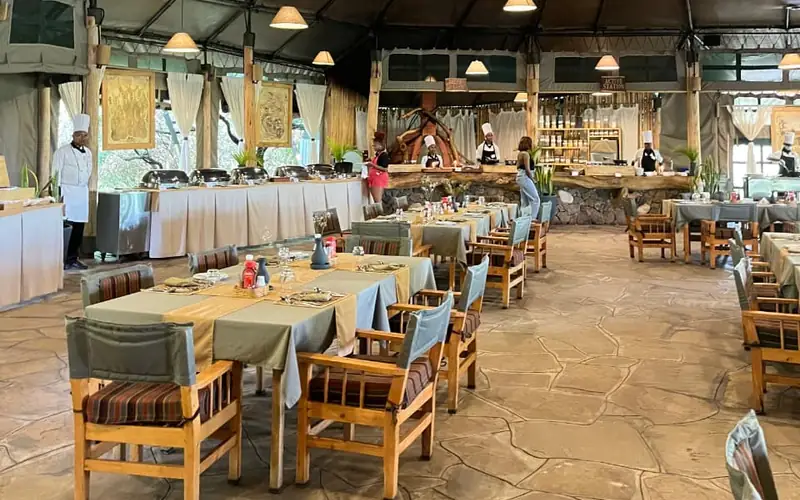
Ask for the room dimensions, proposed seating arrangement, natural light, ventilation and accessibility. A boardroom discussion, a workshop with movable tables and a confidential executive session have different requirements. Confirm whether other groups will be nearby and how noise will be managed during important discussions.
Test or obtain written confirmation of projection, screens, microphones, sockets and the required internet connection. Ask how technical support is provided and what the contingency is if connectivity fails. Printed materials and offline presentations can reduce dependence on a single connection. Confirm water, refreshments, meal timing and breakout areas. A beautiful bedroom or attractive garden does not demonstrate that the property has an appropriate working environment for your team.
Best for: Your priorities Practical comparisons Written confirmation

4. Balance strategic work with recovery time
Compare suitable options
Build the agenda around when people will actually arrive. A substantial transfer followed immediately by a difficult strategy session can produce rushed discussion. Allow settling-in time and avoid placing essential decisions in the final minutes before departure. Give each major discussion a clear owner, purpose and expected output.
An illustrative two-night structure could use the arrival afternoon for orientation and shared context, the full middle day for focused workshops with breaks, and the departure morning for decisions and responsibilities. This is a planning example, not a confirmed Brim itinerary. Add optional recreation that supports the group’s preferences without making every break compulsory. A gentle walk or informal conversation may be more appropriate than a demanding physical challenge between intensive meetings.
Best for: Travel timing Seasonal context Flexible plans

5. Coordinate accommodation and the budget
Check practical details
Prepare a rooming approach before requesting quotations. Clarify single and shared occupancy, accessible rooms, check-in times, early departures and any guests arriving separately. Do not assume employees will be comfortable sharing rooms; establish the organisation’s policy and collect individual requirements discreetly.
Budget for meeting space, accommodation, meals, equipment, facilitation, transfers and agreed recreation. Ask what is included in a residential package and what remains chargeable separately. Check applicable taxes, minimum numbers, room-release deadlines and cancellation conditions. Keep a clear distinction between organisational expenditure and personal extras. A written proposal should identify the assumptions behind its total, including attendance, nights and transport arrangements, so finance can assess changes without reconstructing the entire event brief.
Best for: Budget planning Official terms Clear inclusions

6. Choose retreat planners and specialist support
Check practical details
Corporate retreat planners in Kenya may provide logistics, facilitation or a combination of services. Ask who owns each part of the programme. A strategic planning facilitator should understand the required outputs, while the travel coordinator should manage practical arrangements against the agreed schedule. Confirm whether the venue supplies equipment and whether an external technician is needed.
Brim Adventures can be approached through its corporate quote form to discuss destination, accommodation and group-travel coordination. This is Brim’s own service information, not an independent provider ranking. Ask for confirmation of the exact scope and any specialist partners before assuming that facilitation, AV support or recreation is included. For a more formal learning event, compare the requirements in the conference and seminar guide.
Best for: Your priorities Practical comparisons Written confirmation
7. Prepare a retreat checklist and action handover
Prepare to enquire
Before departure, check the participant list, transport manifest, room allocation, dietary instructions, agenda, equipment and emergency contacts. Allocate someone to handle logistics so the meeting chair can concentrate on the discussions. Keep a route for private concerns and clarify how schedule changes will be communicated.
At the end, read back decisions, assign owners and record realistic deadlines. Share the agreed action summary through an appropriate internal channel. Review progress after the retreat rather than measuring success only through photographs or positive comments about the venue. A retreat delivers value when its decisions remain understandable and actionable once employees return to normal work.
Best for: Your priorities Practical comparisons Written confirmation

8. Frequently asked questions
Prepare to enquire
What is the difference between a retreat and team building?
A retreat usually centres on working discussions or organisational priorities. Team building focuses on how people collaborate. They can be combined, but each element needs a clear purpose and enough time.
Should executives and wider staff attend the same retreat?
That depends on the agenda. Include the people needed for the decisions and explain which sessions are shared. Do not invite a large group to a programme designed only for confidential executive discussion.
What information helps Brim prepare a retreat proposal?
Provide dates, estimated attendance, preferred destination, meeting objectives, rooming preferences and required facilities. Include any fixed approval deadline and explain which activities or services need separate consideration.
Best for: Your priorities Practical comparisons Written confirmation
Four Booking Tips for Organize a Successful Corporate Retreat in Kenya
When planning Organize a Successful Corporate Retreat in Kenya, check four practical things:
- Match the dates. Ask what is suitable for your real travel window.
- Read the daily schedule. Look at transfers, rest and activity time.
- Check every inclusion. Confirm accommodation, fees, transport and optional services in writing.
- Review current conditions. Ordinary changes in weather or wildlife movements are possible; confirm official guidance and supplier terms.
Preparing for Organize a Successful Corporate Retreat in Kenya and What to Check

Before travelling, write down three priorities so the route and services can be planned around your group. Keep all names, dates and inclusions together in the paperwork you share with the other travellers or event organizer.
Worth knowing: a sample plan is not a confirmed booking. Review two documents before you pay: the written itinerary and the itemized quotation. If they disagree, request a corrected version.
3
Priorities to specify before planning
2
Documents to compare before booking
Plan Organize a Successful Corporate Retreat in Kenya with Brim Adventures
Brim Adventures helps travellers and groups plan around their dates, priorities and the practical details of each journey. Compare options here, then request a written itinerary with confirmed arrangements.
Explore more planning guides or request a personal quotation before deciding.
Published · Corporate planning